
Las Vegas is an incorporated city in Clark County, Nevada, and the largest city in the state by population. Located in the Las Vegas Valley of Southern Nevada, the city had an estimated population of 687,050 in 2025 and covers about 142 square miles.
The City of Las Vegas is only one part of the larger urban area commonly called Las Vegas. Major communities such as Paradise, Spring Valley and Enterprise are outside the city limits. Most of the Las Vegas Strip is also in unincorporated Clark County rather than within the incorporated city.
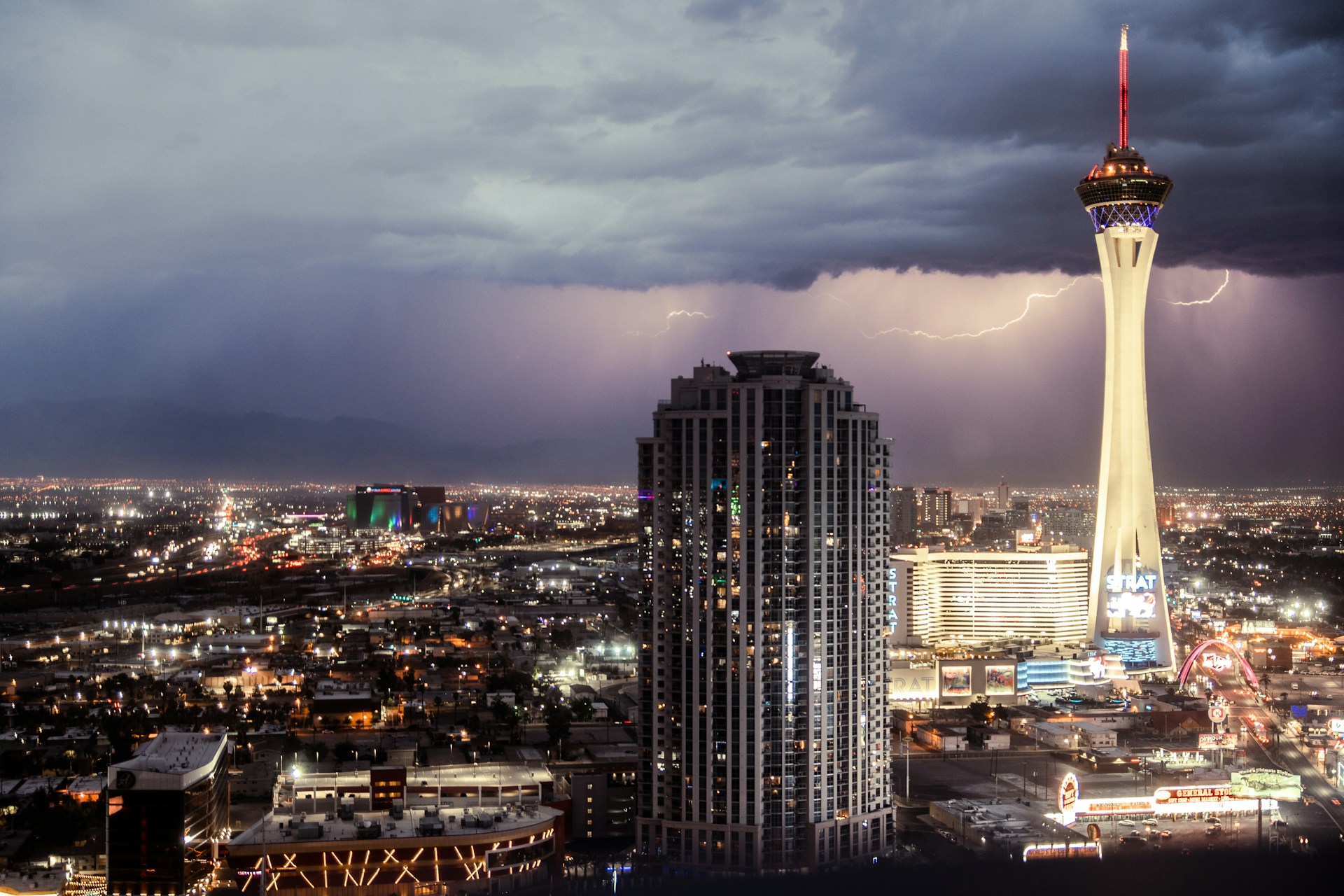
Photo by Andraes Arteaga on Unsplash
Las Vegas at a Glance
| Fact | Las Vegas |
|---|---|
| State | Nevada |
| County | Clark County |
| Region | Southern Nevada |
| Valley | Las Vegas Valley |
| Population | 687,050 (2025 Nevada estimate) |
| Land area | About 142 square miles |
| County seat | Clark County |
| Founded | 1905 |
| Incorporated | June 1, 1911 |
| Municipality type | Incorporated city |
Where Is Las Vegas?
Las Vegas is located in Southern Nevada, in Clark County, within the Las Vegas Valley. The city lies in the Mojave Desert, in a broad basin surrounded by mountain ranges. The Spring Mountains rise to the west, while other ranges border the valley to the north, east, and south.
The Las Vegas Valley slopes southeast toward the Las Vegas Wash, which drains to Lake Mead and the Colorado River. The incorporated City of Las Vegas covers only part of the larger valley. People often use “Las Vegas” to describe places across the valley, including areas outside the city limits.
City of Las Vegas vs. Las Vegas Valley
The City of Las Vegas is one incorporated municipality within the larger Las Vegas Valley. Its city limits cover only part of the urban area that people commonly call Las Vegas. The valley also includes Henderson, North Las Vegas, and large areas of unincorporated Clark County.
| Area | What It Is | Includes |
|---|---|---|
| City of Las Vegas | An incorporated city with its own municipal government and city limits | Areas located within the official City of Las Vegas boundary |
| Las Vegas Valley | A broader geographic and urban area | Las Vegas, Henderson, North Las Vegas, and major unincorporated communities |
Major unincorporated communities in the valley include Paradise, Spring Valley, Enterprise, Sunrise Manor, Winchester, Whitney, and Summerlin South. These areas are governed by Clark County rather than the City of Las Vegas. This distinction is easy to miss because many places across the valley are commonly described as being in Las Vegas.
Las Vegas Population
Las Vegas had an estimated population of 687,050 as of July 1, 2025, according to the Nevada State Demographer. Las Vegas ranks first among the largest cities in Nevada by population. The state estimate also places about 28% of Clark County's population within the incorporated City of Las Vegas.
The 2020 Census counted 641,903 residents in Las Vegas. Nevada's 2025 estimate is about 45,000 higher than that count. The U.S. Census Bureau separately estimates the city's 2025 population at 679,817. Localpolitan uses Nevada's 687,050 estimate for consistency across its Nevada population references.
Las Vegas Neighborhoods
Las Vegas has a mix of traditional neighborhoods, historic districts, master-planned communities and larger planning areas. Well-known areas within the city include Downtown Las Vegas, Rancho Oakey, Huntridge, Historic Westside, Charleston Heights and Desert Shores. Portions of the larger Summerlin master-planned community are also within Las Vegas city limits.
There is no single official count of Las Vegas neighborhoods. The City of Las Vegas uses 16 community planning areas, but those areas are not the same as individual neighborhoods. A planning area can contain several neighborhoods, districts and subdivisions.
Las Vegas ZIP Codes
Las Vegas mailing addresses primarily use ZIP Codes in the 891xx series. These ZIP Codes serve areas within the incorporated City of Las Vegas as well as surrounding unincorporated communities. ZIP Codes are postal delivery areas, so their boundaries do not match city limits or neighborhood boundaries.
This is why a Las Vegas, NV mailing address does not necessarily mean the property is within the incorporated city. The Las Vegas ZIP Codes map shows how these postal areas extend across the city and surrounding parts of the Las Vegas Valley.
Downtown Las Vegas and the Las Vegas Strip
Downtown Las Vegas and the Las Vegas Strip are two of the best-known parts of the Las Vegas area, but they are not the same place. Downtown is within the incorporated City of Las Vegas, while most of the Strip lies outside city limits in unincorporated Clark County.
Downtown Las Vegas developed around the original city center and remains the historic and civic core of Las Vegas. Fremont Street is one of its best-known landmarks, and Las Vegas City Hall is also located Downtown. The area has a different role from the Strip, with government offices, historic sites, entertainment districts and older neighborhoods concentrated nearby.
The Las Vegas Strip extends along Las Vegas Boulevard south of Downtown and is the region's main resort and casino corridor. Most of the Strip runs through the unincorporated communities of Paradise and Winchester. Even though it is closely associated with Las Vegas worldwide, most of the corridor is governed by Clark County rather than the City of Las Vegas.
Cities and Communities Around Las Vegas
Las Vegas is surrounded by a mix of incorporated cities and unincorporated communities. Among the cities near Las Vegas, North Las Vegas and Henderson are the closest. Boulder City is farther southeast, beyond the main urban core of the Las Vegas Valley.
| Place | Type | Relationship to Las Vegas |
|---|---|---|
| North Las Vegas | Incorporated city | Borders Las Vegas to the north and northeast |
| Henderson | Incorporated city | Southeast of Las Vegas in the Las Vegas Valley |
| Boulder City | Incorporated city | Southeast of Las Vegas near Lake Mead |
| Paradise | Unincorporated town and CDP | South and southeast of the Las Vegas city limits |
| Spring Valley | Unincorporated town and CDP | West and southwest of Las Vegas |
| Enterprise | Unincorporated town and CDP | Southwest of Las Vegas in the Las Vegas Valley |
Other major unincorporated communities around the valley include Sunrise Manor, Winchester, Whitney and Summerlin South. These places are part of the larger Las Vegas urban area, but they are not part of the incorporated City of Las Vegas.
Brief History of Las Vegas
The Las Vegas Valley had a long history before the modern city was founded. Southern Paiute people lived in the region and used the valley's natural springs. The name Las Vegas means “the meadows” in Spanish, a reference to the springs and grassy areas that made the valley an important stopping place for travelers crossing the desert.
Modern Las Vegas began as a railroad town. On May 15, 1905, the railroad company auctioned 110 acres of land near what is now Downtown Las Vegas. The growing town incorporated as the City of Las Vegas on June 1, 1911.
Las Vegas expanded rapidly during the 1930s and 1940s. Construction of Hoover Dam brought thousands of workers to Southern Nevada, while Nevada legalized gambling in 1931. Casino and resort development later grew along Fremont Street and the highway that became the Las Vegas Strip. In the decades that followed, Las Vegas and the surrounding valley developed into one of the world's best-known tourism and entertainment destinations.
Frequently Asked Questions About Las Vegas
Is Las Vegas a city or a county?
Las Vegas is an incorporated city in Clark County, Nevada. It is also the county seat of Clark County. The City of Las Vegas has its own municipal government and official city limits.
Is Las Vegas the capital of Nevada?
No. Carson City is the capital of Nevada. Las Vegas is the state's largest incorporated city by population.
What is Las Vegas known for?
Las Vegas is best known for its resorts, casinos, live entertainment, conventions and nightlife. The larger Las Vegas area also includes major sports venues, shopping, dining and outdoor recreation near the surrounding desert and mountains.
Is the Las Vegas Strip actually in Las Vegas?
Most of the Las Vegas Strip is outside the incorporated City of Las Vegas. Much of the resort corridor is in the unincorporated Clark County communities of Paradise and Winchester.
Why do some places outside the city limits have a Las Vegas address?
A Las Vegas mailing address does not always indicate that a location is within the City of Las Vegas. Postal addresses and ZIP Codes are designed for mail delivery and can use Las Vegas as the mailing city for locations in nearby unincorporated areas.
Is Las Vegas in the Mojave Desert?
Yes. Las Vegas is located in the Mojave Desert in Southern Nevada. The city sits within the Las Vegas Valley, a desert basin surrounded by mountain ranges.
Explore More Las Vegas Resources
- Las Vegas Neighborhoods — Explore Las Vegas neighborhoods, planning areas, master-planned communities and surrounding valley communities with the Localpolitan Reference Map.
- Las Vegas ZIP Codes — Find ZIP Codes across Las Vegas and the surrounding valley with maps, directories and postal-geography explanations.
- What Cities Are in the Las Vegas Valley? — See the incorporated cities and major unincorporated communities that make up the Las Vegas Valley.
- Cities Near Las Vegas — Compare nearby cities, towns and communities by location, distance and drive time.
- Cities in Clark County, Nevada — See Clark County’s incorporated cities and how they relate to the county’s unincorporated communities.
- Cities in Southern Nevada — Explore the incorporated cities across Southern Nevada and their place within the region.